Disclosure: As an Amazon Associate, I earn from qualifying purchases at no cost to you.
8 Small-Bedroom Mistakes That Make It Feel Cramped (and the Simple Fixes)
A small bedroom rarely feels cramped because it’s small. More often, it’s a handful of small, easy-to-miss habits doing the work — and the good news is that almost all of them are simple to undo.
None of this means buying new furniture or knocking down a wall. Mostly it’s about what you move, lower, or quietly take away, so the room finally has space to breathe.
Here are eight of the most common things that make a small bedroom feel tighter than it needs to — each with a simple fix. Take the ones that match your room, and leave the rest.
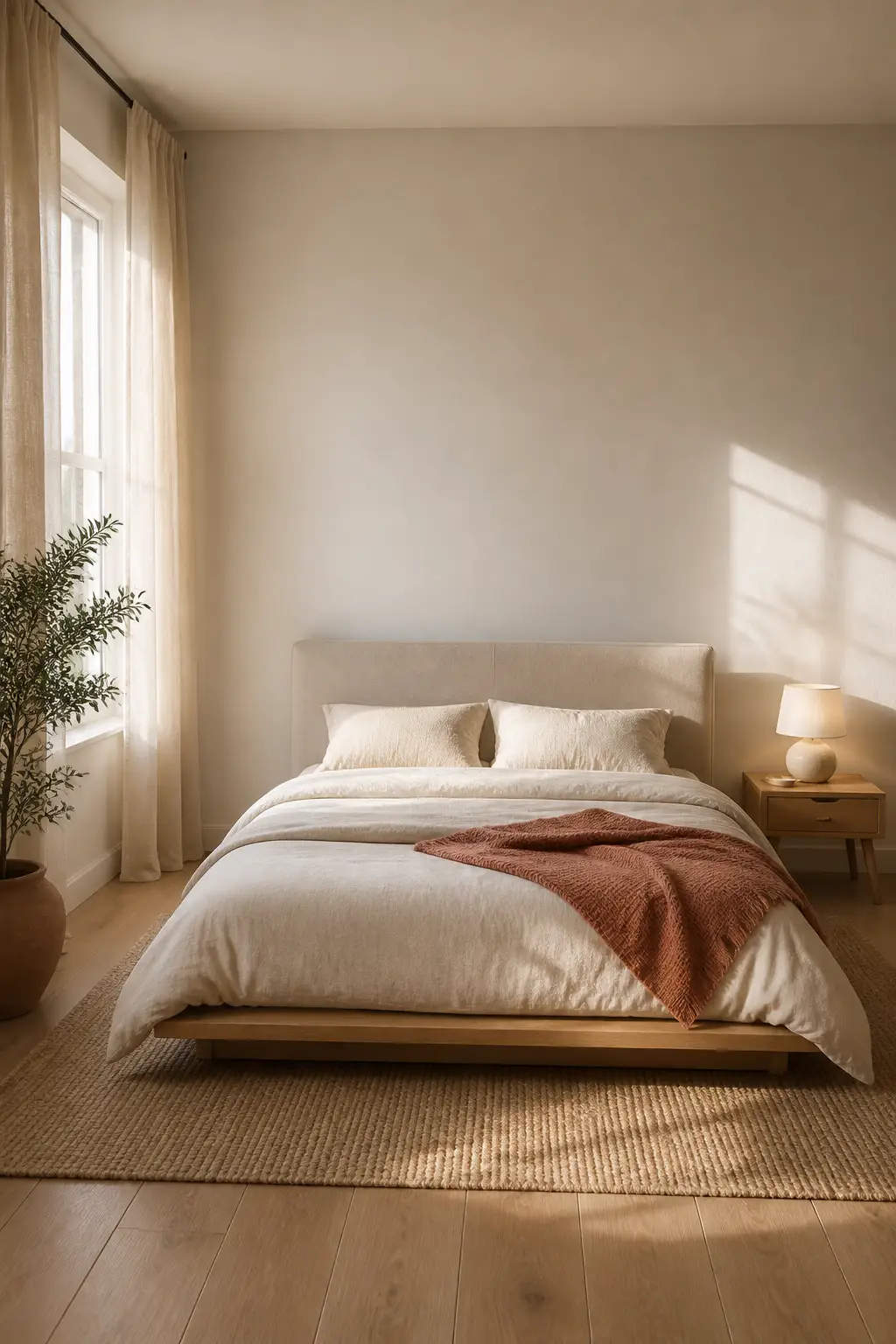
1. Pushing the Bed Into the Corner
It feels natural to push the bed into a corner to save space — but that’s often what makes a small room feel lopsided. With the bed jammed against two walls, one side becomes hard to reach, the flow of the room gets blocked, and the whole space reads as crowded on one side and empty on the other.
Where you can, float the bed against the middle of the main wall, with a clear path down each side — even a narrow one is enough. If a corner really is your only option, leave a small gap of around 15–20 cm between the bed and the wall so it doesn’t feel boxed in, and skip the footboard to keep the foot of the bed open and airy.
2. Filling the Room With Lots of Small Furniture
Here’s a quiet one most of us get backwards: small furniture doesn’t automatically suit a small room. A tiny table here, a little shelf there, a slim cart, a stool — each piece is one more thing for your eye to catch, and a few small objects can make a room feel busier than one well-chosen piece would.
Try fewer pieces that each do more. One nightstand with a drawer can replace a table, a basket, and a spot for the lamp all at once. A bench at the foot of the bed holds blankets and gives you somewhere to sit. The same thinking helps if your room doubles as a getting-ready spot — there’s a calm way to style a small makeup vanity without crowding the floor. Fewer, slightly larger things almost always make a small room feel more settled.
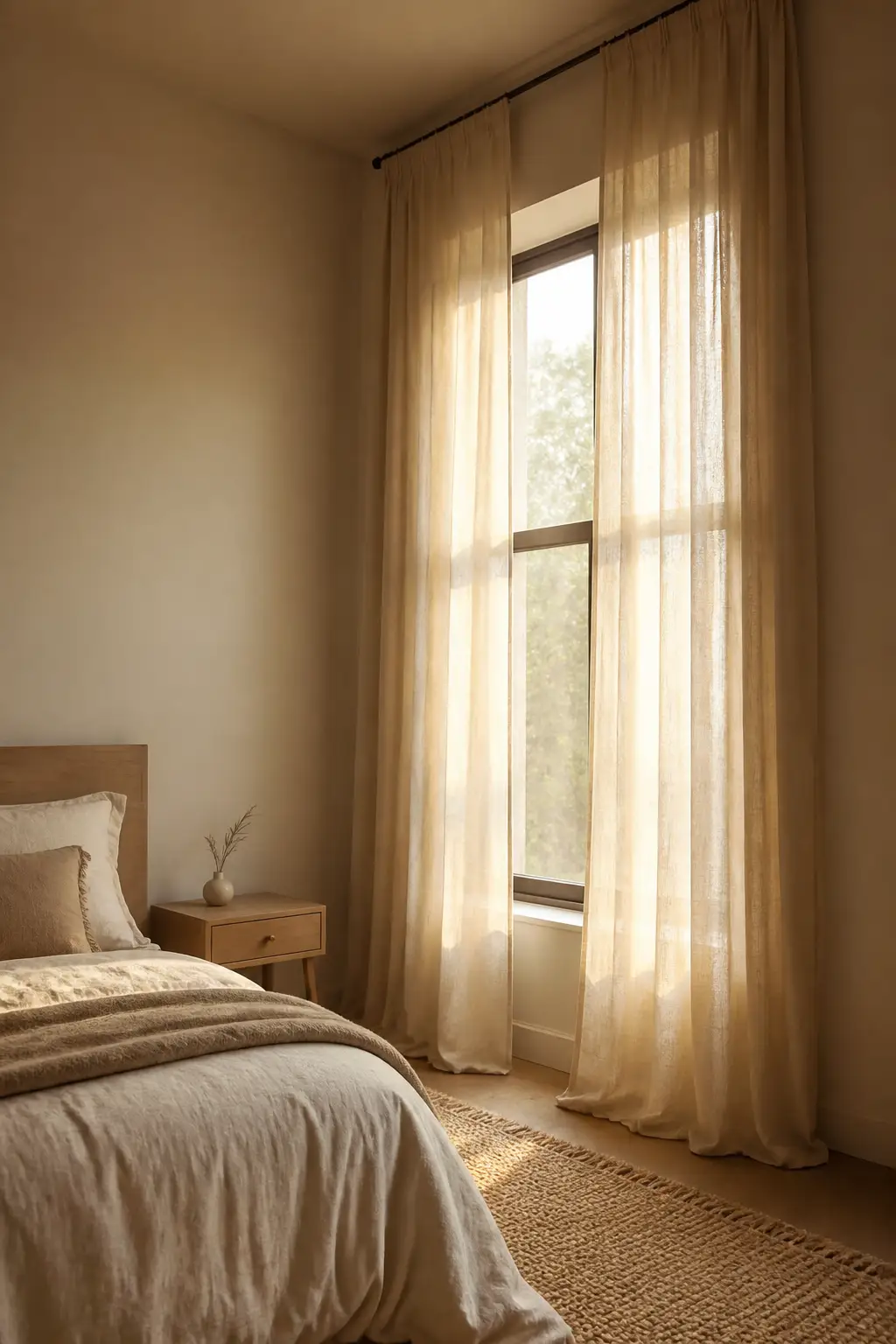
3. Hanging the Curtains Too Low
One simple change makes more difference than almost anything else on this list: how you hang your curtains. Mounting the rod right at the top of the window, with panels that stop at the sill, draws a hard line partway up the wall and cuts the room’s height in half. The ceiling feels lower, and the wall feels shorter than it really is.
Hang the rod high instead — close to the ceiling, roughly 10–15 cm above the window frame — and let the panels fall all the way to the floor, just brushing it. Your eye travels the full height of the wall, and the room instantly feels taller. Light, airy fabrics like linen or cotton keep the whole thing from feeling heavy.
4. Crowding the Wall Above the Bed
Think of the wall above your bed as a place for the room to rest, not work. A grid of small frames there does two things you don’t really want in a small bedroom: it adds a lot of visual busyness right where you’d like calm, and it leaves a cluster of frames hanging over your pillow.
Let that wall stay quiet. Leaving it bare — or close to it — gives your eye somewhere to settle and makes the room feel more open. If you have a piece of art you love, it often looks just as good leaned on a dresser or hung on a different wall, where nothing sits above your pillow.
5. Choosing Heavy, Dark, Closed-In Furniture
Bulky, dark, closed-in furniture is one of the sneakiest space-shrinkers. Heavy pieces sit visually “heavy,” and because they block your view of the floor, the room reads as smaller — the less floor you can see, the tighter a space feels.
Look for lighter wood tones and pieces you can see under or through. A nightstand or low dresser raised on slim legs lets the floor run on beneath it, and that sliver of visible floor quietly tricks the eye into reading more room. Glass or mirrored fronts do something similar, bouncing light around instead of soaking it up.
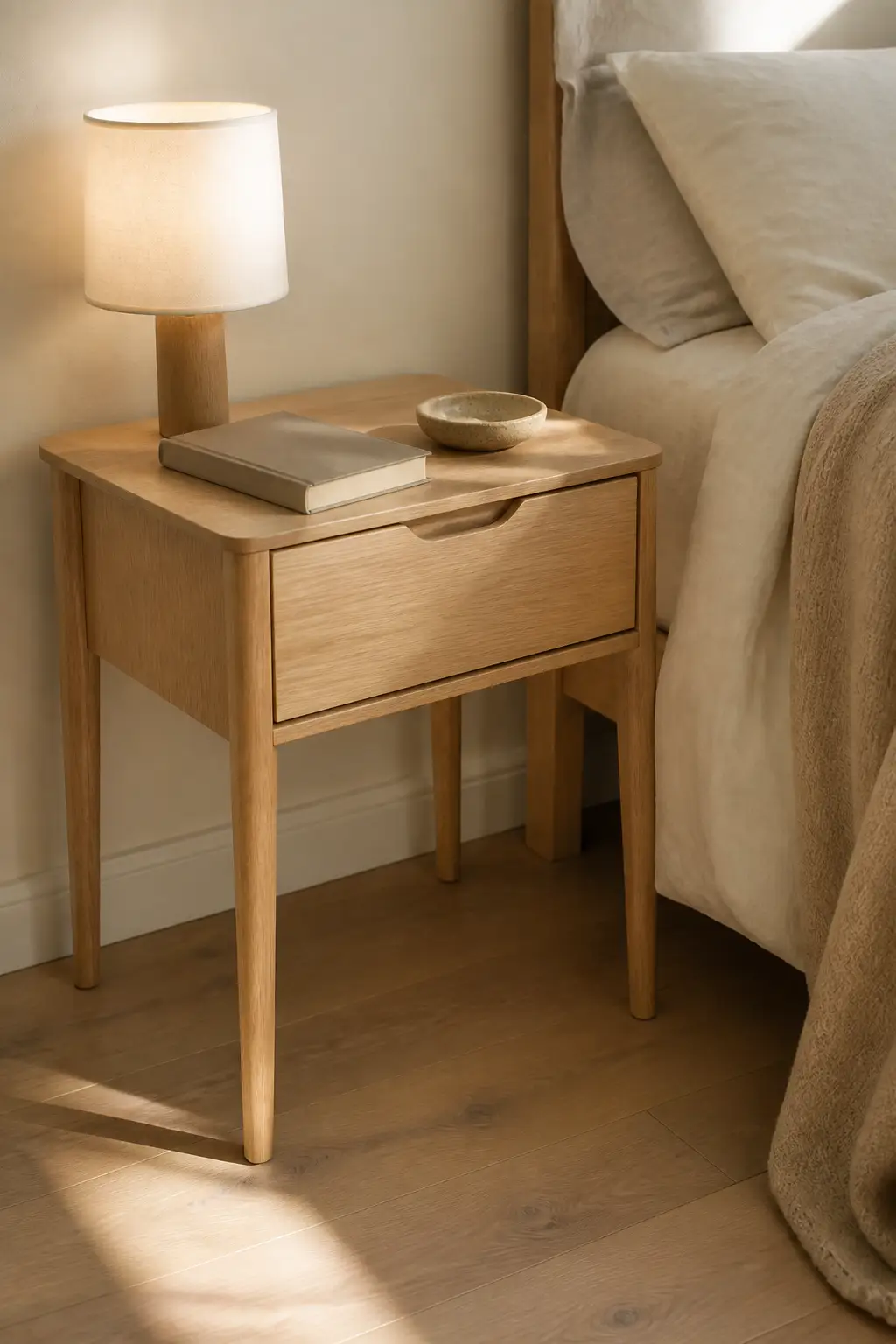
6. Lighting the Whole Room From One Spot
Lighting a whole bedroom with one bright bulb in the middle of the ceiling flattens everything and throws hard shadows into the corners — which, oddly enough, makes the room feel smaller and more boxed-in.
A few softer, lower lights work so much better. A small lamp on the nightstand, a plug-in wall sconce, a string of warm fairy lights tucked along a shelf and kept clear of curtains and bedding — together they make a small room feel deeper and far cozier than one harsh light ever could. Go for warm-white bulbs over cool ones, keep any cords tidy along the wall rather than under a rug, and if you’d like a little extra glow, a flameless candle gives it safely.
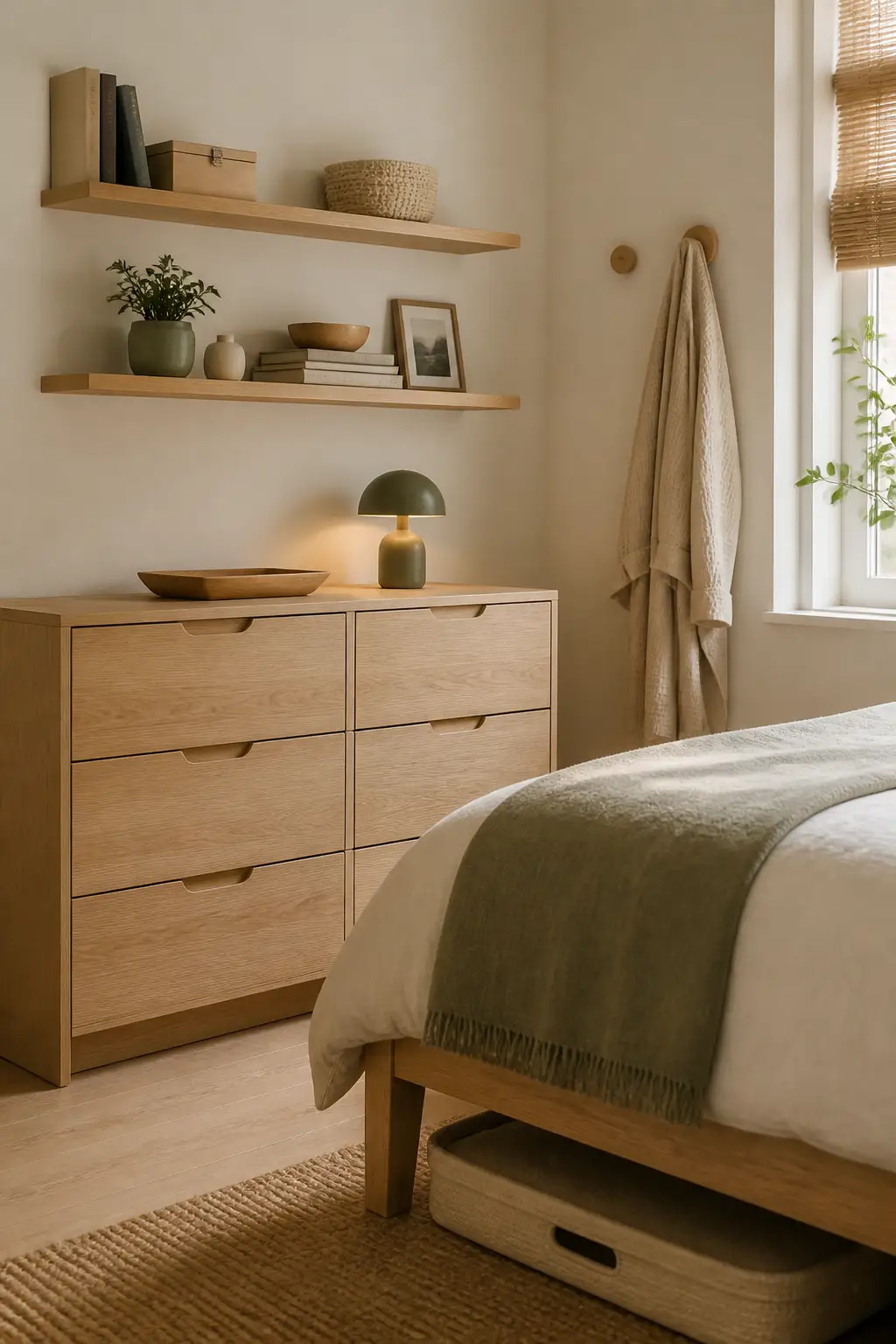
7. Letting Everything Live on the Floor
When storage spills onto the floor — a laundry basket here, a pile of shoes, the chair that’s slowly become a clothes rack — it reads straight away as “less room,” because open floor is exactly what makes a small space feel open.
The fix is to send things up and under. A couple of securely mounted shelves use the wall instead of the floor — keep the top shelf light and the heavier things low. A few hooks on the back of the door quietly hold a robe or a bag, and the space under the bed is some of the most useful you have — slide a couple of flat bins underneath for whatever you don’t reach for every day. If you’d like more ways to do this, a few simple small-space storage ideas go a long way in a bedroom.
8. Mixing Too Many Colors and Patterns
A small room cut into lots of colors and patterns — a bold wall, busy bedding, a patterned rug, a scatter of mismatched accents — feels busier and tighter than it needs to. Every strong contrast is a visual break, and the more breaks there are, the more chopped-up a little room looks.
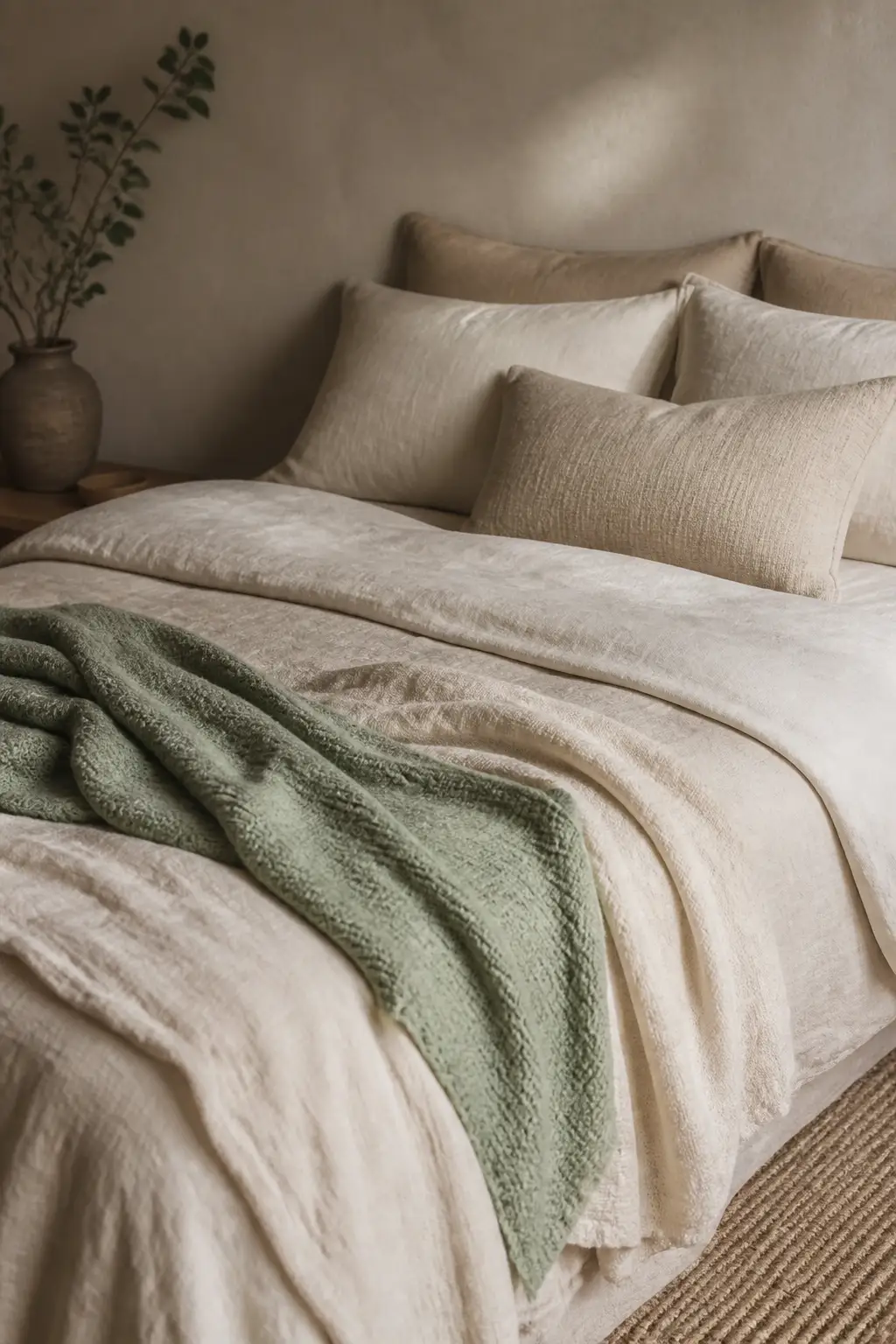
Lean into a calm, tonal palette instead. Keep warm neutrals as your base — cream, oatmeal, soft warm wood — with just one gentle accent, maybe a little sage or terracotta. With fewer visual breaks, the room reads as one soft, continuous space, which makes it feel both bigger and more restful. You can still layer plenty of texture — a knit, some linen, a soft rug — for warmth, without the busyness.
If You Only Change One Thing
If all of this feels like a lot, start here: give your eye one place to land. Pick a single focal point — usually the bed, or one piece of art you love — and let everything else stay quiet around it.
A small bedroom with one clear focal point feels calm and intentional. One with three or four things competing for attention feels cramped, no matter how tidy it is.
A Small Room That Feels Open
A small bedroom doesn’t need more square footage to feel calm and open. Usually it just needs a few of these small frictions taken away — and once the room can breathe, all the warm, cozy bedroom touches you love finally have room to shine.
You don’t have to change everything at once. Pick the one thing that bothers you most, swap it this week, and notice how much lighter the whole room feels. The rest can follow whenever you’re ready.